Tuesday, December 2, 2008

Music - The Frequency of Creation


In the beginning was the Word.

Prior to that utterance

(sound, vibration, frequency)

was thought,

then intent.


As our world and conscious experience continues to unfold about us with what seems to be an ever increasing acceleration, it can often leave us feeling shocked in disbelief or astounded in amazement. It can be helpful in our journey to look again and reflect on our very own essence.

What seems amazing today is the distance our sciences and knowledge have traversed in illuminating the wonderment of this life experience. It is an astounding fact that still, through all of our discoveries, we have yet to determine any boundaries in either the macro or the micro. From the largest to the smallest, the more we observe the more we see.

Through my years of study and observation of Music as Medicine, the video below (I believe) most succinctly connects all of the validating principles as to the "How and Why" music can work to heal. Though music itself is not mentioned directly in this film, the components of music (sound, frequency, vibration) most certainly are.


Sound is the very essence and backdrop of creation. Throughout history, it has been recorded that sound is creative. All of creation is energy vibrating at different frequencies and sound. The Word, is the primordial frequency to all that is.

Music is the vibrating pulsation of intelligently created frequencies interrelating, colliding and coalescing to communicate the beauty and intent of the Word. May all be filled with the wonderment and experience deep appreciation for this experience we know as Life.

Inspiration/Imagination + Energy = Matter

Music Heals!


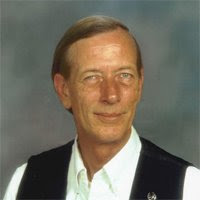
Pioneer Spotlight - Norman M. Weinberger

"Many of us became musicians to fill an emotional need, not knowing the mind was benefiting too. As more research ties the mind to health and emotional well being, music will become both medicine and exercise for the mind!"


The work, the research, and the prolific publications of Norman Weinberger on Music, Cognitive Processes, Learning and Education continue to provide a rich source of knowledge and inspiration to my own understanding of Music as Medicine. The scientific validation that music provides a tool to improve learning, enhance memory and provide beneficial health results becomes irrefutable through the work of Music Medicine Pioneers like Norman Weinberger.

As a professor in the Department of Neurobiology and Behavior at the University of California Irvine, Norman Weinberger's research has focused on how the brain learns and remembers information, particularly how it stores what we hear. In 1998, he became Executive Director of the International Foundation for Music Research. The goal of the Foundation is to fund basic and applied research on music, learning and behavior.

Much of Norman Weinberger's attention has revolved around the importance of Music in Education. It is not difficult to see the results in our society from the removal of music in our public education system. The testimony given before the International Foundations for Music Research in July of 1999 still speaks loud and clear. If you have children in the public school system please consider the value of Norman Weinbergers testimony in the learning and behavioral development of your children.

- The devaluation of music because it involves emotion falsely assumes that music is not cognitive. Actually, music involves as many or more cognitive processes than any other school subject. For example, playing from a score involves most if not all cognitive processes. These include perception of the score and of the music produced, interpretation of images on the page based on prior learning of an abstract language with its own complex syntax, continual and focused attention, planning highly intricate movements, adjusting this motor program to not only match the score,s meter and rhythm but also the ongoing tempo as indicated by the conductor, executing the motor plan to make an appropriate level of sound, with appropriate phrasing, nuance and expression, attending to the results both aural and kinesthetic, and beginning this continual process of problem solving again. Where in all of this is there mental activity less exalted or less important for cognitive development than in reading, riting or rithmetic? Of course, these are important subjects, but so is music. If one is concerned with developing the human intellect, rather than whether the school band wins prizes, how can one possibly justify treating music as a second-class subject in education?


Norman Weinberger's work, as it relates specifically to music can be found at;

MuSICA - The Music & Science Information Computer Archive.

Norman Weinberger's current research interests;

Neurobiology of learning and memory

I am in personal gratitude to Norman Weinberger for his contributions to my own personal growth and for his generous contributions to the understanding of Music as Medicine